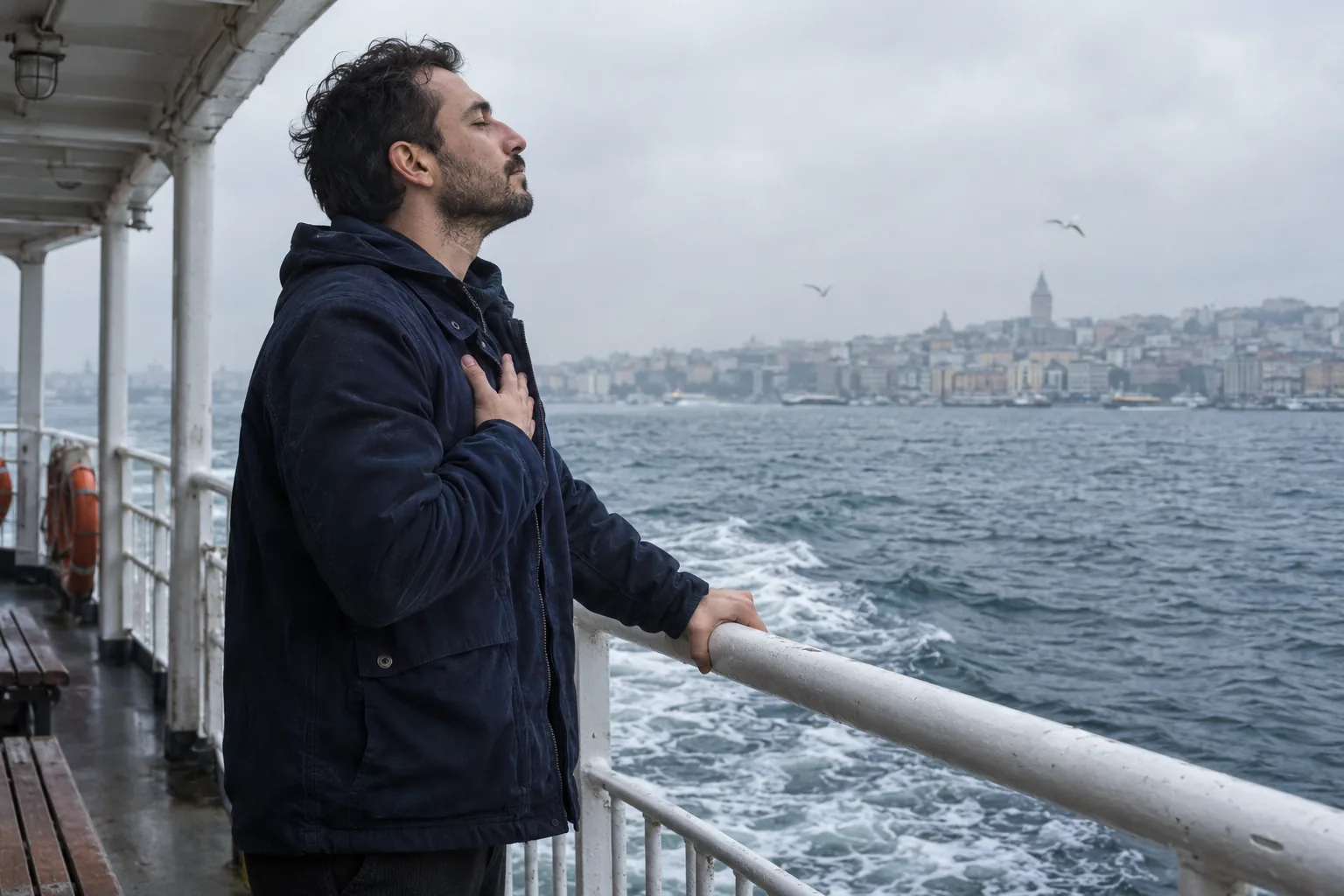
Sudden intense fear, palpitations, breathlessness, a sense of “I’m dying” or “I’m losing my mind”. Understanding how attacks keep going is the first step in coping with them.
A panic attack is a very frightening experience; people often remember the place and time of their first attack, even what they were wearing. During an attack the body reacts as if there were real danger: the heart speeds up, breathing quickens, the head spins. These reactions are not dangerous in themselves, but combined with a thought like “I am having a heart attack”, the fear grows.
So the first step is to make sure there is no physical cause; a medical assessment before starting therapy matters. Then, in cognitive behavioural therapy, we examine the cycle of the attack together. Clients often notice that what tires them most is not the attack itself but the possibility of it coming back.
An important part of the work is approaching avoided places and bodily sensations step by step, in a planned and safe way. The pace is yours; we do not push, we decide together.
What you may notice
Intense fear peaking within a few minutes
Palpitations, chest tightness, a feeling of not getting enough air, dizziness
Fear that another attack will come
Avoiding ferries, the metro, crowds or being alone
Constantly checking your pulse and your body
Who is it for?
People whose heart and other physical causes have been checked by a doctor
Those whose lives are shrinking because of fear of attacks
Those who went to A&E many times and were told “nothing is wrong”
Those on medication who want therapy as well
Panic attacks: how we work
Understanding the attack
Together we unpick how bodily sensations are read as “danger” and how fear escalates.
Meeting the sensations
In a safe setting, with controlled exercises, we learn not to fear bodily sensations.
Avoided places
Step by step, at your pace, we return to places like the ferry, the metro or the supermarket.
Safety behaviours
We notice and reduce habits like always carrying water or sitting near the exit.
What people ask about this
KadıköyKadıköy, Wednesday 4 November 2026
Will I need medication?
Psychologists cannot prescribe or change medication; that is a psychiatrist’s decision. Many people work with therapy alone. In some cases medication and therapy together are more suitable, for example when there is a marked drop in sleep, appetite and daily functioning.
When I think it is needed I say so openly and, if you wish, suggest psychiatrists I work with. If you already take medication, always talk to your doctor before stopping it yourself.
However frightening, an attack usually peaks within a few minutes and then eases. In the moment you can try slowing your breathing (in for four, out for six), feeling your feet on the floor and counting five objects around you.
If there is chest pain, severe symptoms for the first time or fainting, call 112; panic attacks are only discussed after physical causes have been ruled out.