Every first session is a little different. Still, the order is usually something like this.
0'10'20'30'40'50'
minute 0Welcome
We meet and talk about confidentiality and the fact that nothing is recorded. If you have questions, I answer them first.
minute 5What brings you
What has changed recently, and for how long? You start wherever you like, in your own words.
minute 20Now and before
Sleep, work, relationships, the people who support you; a few important stops from the past if needed.
minute 38What do we want?
We name what you hope for from therapy and write down the first goals together.
minute 46Closing
We agree how to continue: frequency, day, a first small task or simply time to think.
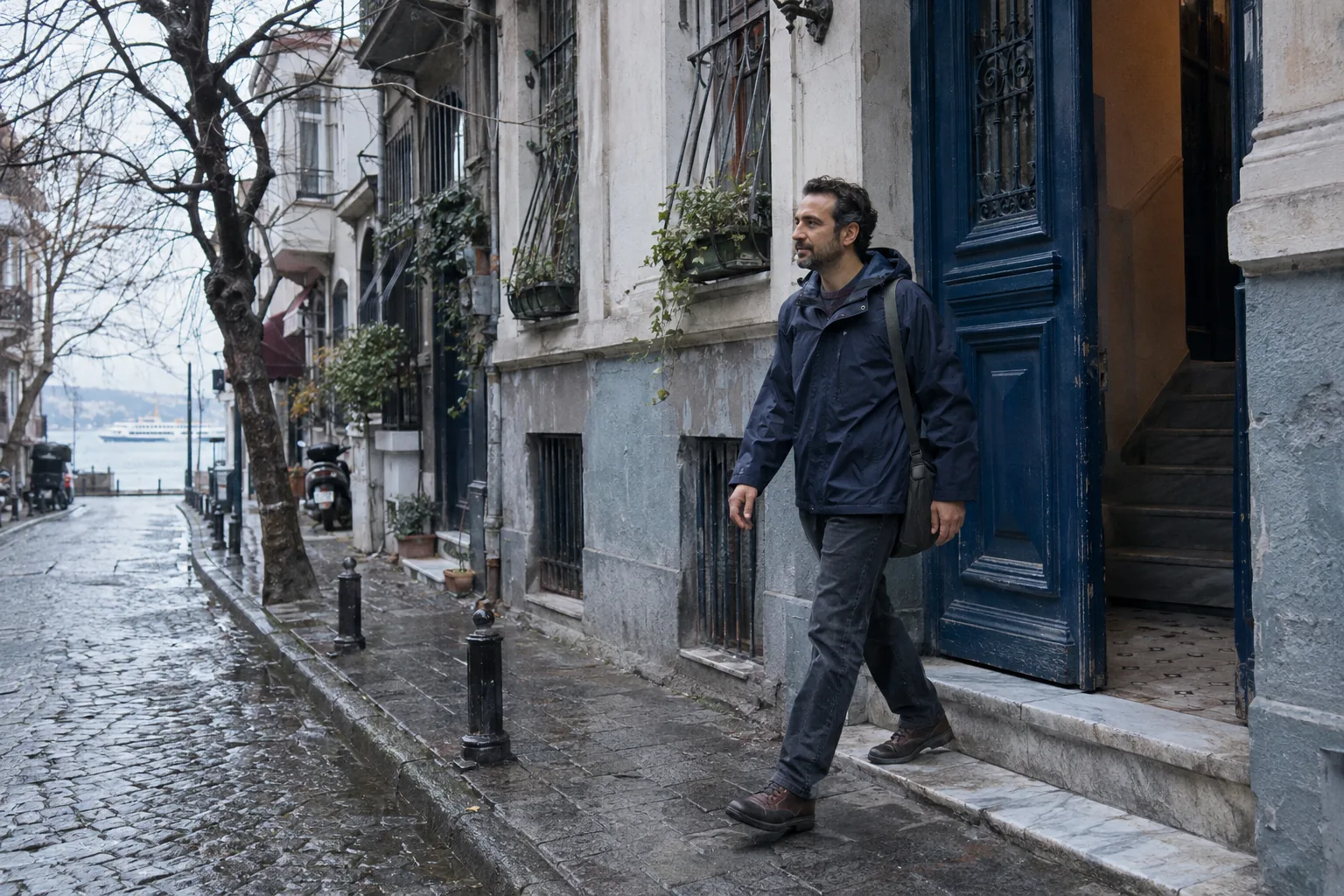
The doorbell says “Pusula”; third floor.
Before you come
No preparation is needed; you can come without knowing what to say
Note any questions on your phone
If you take medication, knowing its name is enough; no reports needed
Arriving five minutes early is enough; there is water and tea in the waiting corner
After the first session
Most people leave the first session a little tired but lighter. Saying things out loud for the first time can be tiring; that is normal.
If you want to continue, we usually start with one session a week. After three or four sessions we review together and change the plan if needed. If you decide not to continue, simply saying so is enough; I will also share other resources that may suit you.
The aim of therapy is not to change you; it is to see what is already there, together.
About the first meeting
What is the difference between the intro call and the first session?
The intro call is a free 15-minute introduction by phone or online; it is not a session. I briefly hear what brings you, explain how I work and we see whether we suit each other.
The first session is a 50-minute assessment and is charged at the session fee.
Do I need to prepare anything before the first session?
No. You can come without knowing what to say. Noting your questions on your phone is enough. If you take medication it helps to know its name; you do not need to bring reports or test results.
What is the difference between a psychologist, a psychiatrist and a counsellor?
A psychologist holds a psychology degree. A clinical psychologist has a master’s or doctorate in clinical psychology with training in assessment and psychotherapy. A psychiatrist is a medical doctor who diagnoses and can prescribe medication. A counsellor in Türkiye graduates from psychological counselling and guidance.
I am a clinical psychologist; I do not prescribe and I work with psychiatrists when needed.